Regulatory expectations and compliance deadlines can change quickly. Before relying on any specific date, examiner priority, or enforcement posture described here, confirm the current status against the relevant agency source and applicable legal counsel.
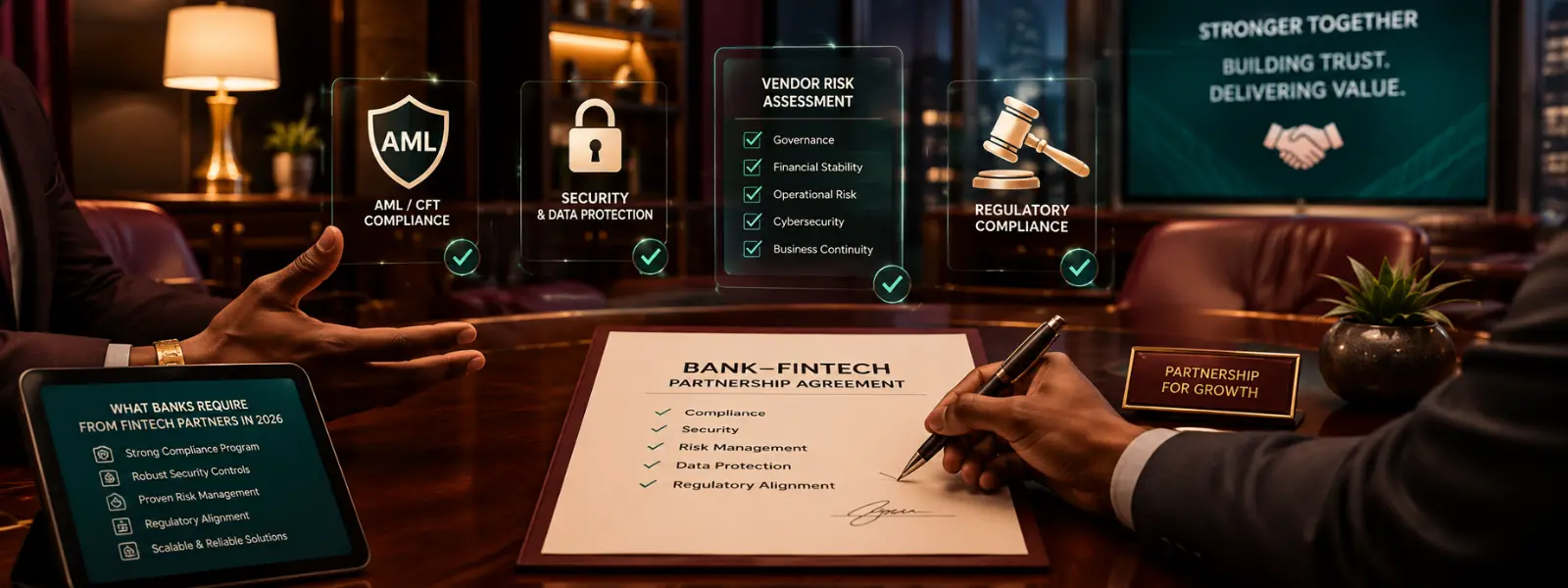
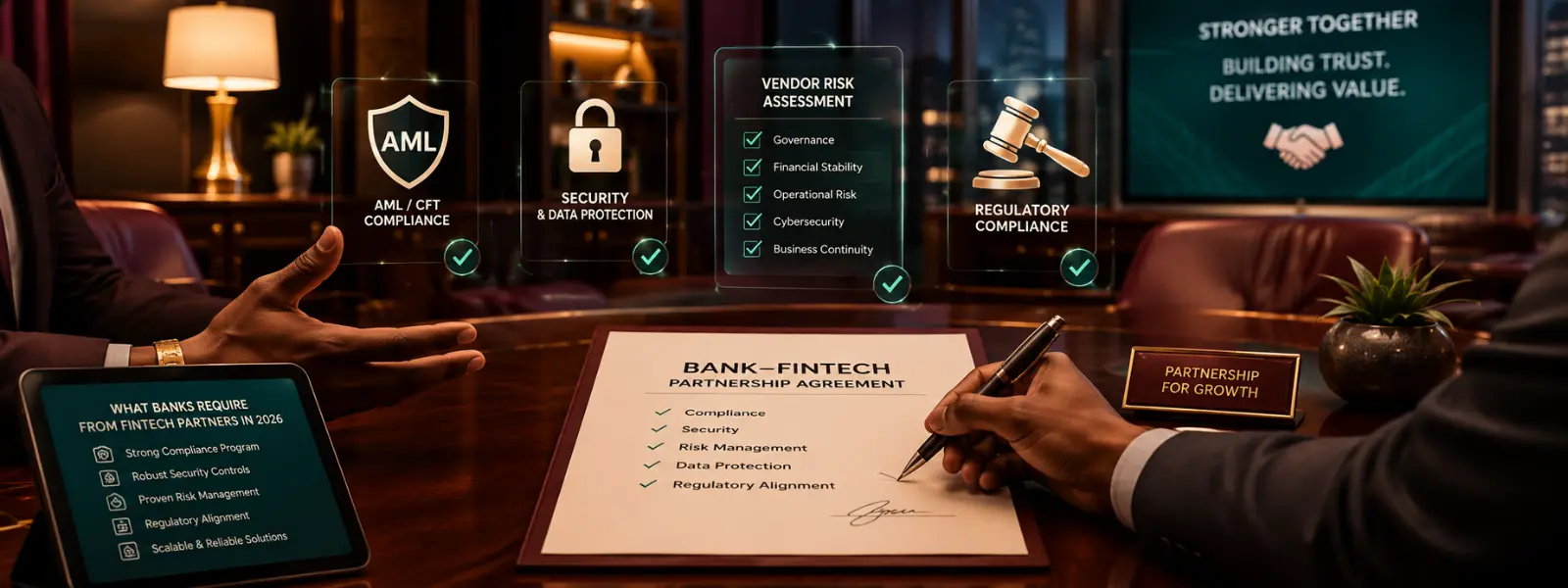
If you are a fintech working toward a banking partnership, the due diligence process you are about to go through looks nothing like it did two years ago. Banks that once moved quickly through fintech partnerships are now conducting detailed compliance assessments before signing anything, and the list of what they require has grown significantly.
This is not a trend that is still developing. It is the current reality of the market. Banks have faced regulatory pressure from the OCC, FDIC, and Federal Reserve over their fintech partnership programs, and they have responded by raising the bar for every fintech that wants to work with them. Understanding exactly what they now require is the starting point for getting a deal done.
Why Banks Have Gotten Significantly More Demanding
Regulators have made bank-fintech partnerships a priority supervisory concern, particularly where banks rely on third parties to deliver deposit, payment, or lending products. Banks remain responsible for compliance with applicable laws and regulations when they use fintech partners, and recent guidance and enforcement activity have pushed many institutions to strengthen due diligence, monitoring, and contractual controls before approving new partnerships.
The consequence for fintechs is direct. Banks that were once willing to move quickly through a partnership assessment are now conducting more thorough due diligence and taking significantly longer to complete it. Some banks have exited the Banking-as-a-Service space entirely rather than manage the regulatory burden. The pool of willing banking partners has shrunk, which means fintechs that cannot demonstrate a credible compliance posture are finding fewer doors open to them.
A fintech's compliance posture now determines its ability to secure and maintain critical banking partnerships. This has moved from a compliance consideration to a direct business risk.
What Banks Now Require: AML Controls First
AML controls have become one of the most significant requirements in banking partnerships in 2026. Banks are increasingly giving fintechs detailed specifications for AML and sanctions compliance controls before a partnership moves forward. This is a material change from prior years, when many banks took a more flexible approach.
Specifically, banks are now requiring real-time AML transaction monitoring and sanctions screening systems, specific KYC and customer due diligence controls that meet the bank's own standards, and documented evidence that those controls are actually operational, not aspirational. An AML policy document is not sufficient. Banks want to see evidence that the program is running.
Banks may also require an annual independent compliance program audit before a deal can proceed. This means a third party, not your own team, reviews your AML and compliance program and attests to its adequacy. For fintechs that have not yet built a formal compliance program, this requirement alone can delay or block a partnership.
The Security Program Requirements
Beyond AML, banks assess the fintech's broader information security program across several areas.
Written Information Security Program
Banks want to see a current, documented information security program with executive or board approval. Generic policies downloaded from the internet are easy to identify. Policies that do not reflect the fintech's actual technology environment, do not address cloud infrastructure and remote access, or have not been reviewed in the past year will generate findings.
Incident Response
Your incident response plan needs to demonstrate operational readiness, not just documentation. Banks expect evidence that the plan has been tested through tabletop exercises and that your team knows their roles before an incident occurs. A plan that exists only on paper and has never been tested will not satisfy a bank assessor.
Third-Party Risk Management
Every vendor with access to your systems or customer data is a risk that your banking partner is also exposed to through you. Banks now expect a formal vendor risk management program that includes initial due diligence before onboarding vendors, annual security reviews of critical vendors, contractual security requirements in vendor agreements, and documented exit strategies. Most fintechs have a vendor list. Few have a genuine vendor risk management program that satisfies bank scrutiny.
Governance and Executive Oversight
Banks assess whether security and compliance have meaningful executive oversight. This means documented evidence of regular security reporting to senior leadership, clear accountability for the compliance program, and in some cases evidence of board-level engagement with security and compliance matters. If security is purely an engineering function with no executive visibility, that will generate a finding.
What Fintechs Are Getting Wrong
The most common mistake fintechs make when approaching a banking partnership is treating the compliance assessment as a documentation exercise. They assemble policies and fill out questionnaires the week the assessment arrives, rather than building the underlying program continuously. Experienced bank compliance teams know exactly what this looks like and it raises questions about whether the controls are real.
The second most common mistake is underestimating the AML requirements. Many fintechs assume their product does not require sophisticated AML controls because they are not a bank. If your product touches payments, money movement, account management, or lending in any form, a banking partner will assess your AML program in detail. Starting that assessment without an operational AML program is a serious problem.
How to Prepare
The fintechs that move through banking partnership assessments most efficiently are the ones that build their compliance program as if they were already being assessed. That means current policies that reflect actual operations, an operational AML program with documented transaction monitoring, ongoing vendor risk reviews, and regular compliance reporting to leadership.
If your fintech is not yet there, a compliance program gap assessment is the right starting point. It maps your current posture against what banking partners actually require, identifies specific gaps, and produces a prioritized remediation roadmap with realistic timelines.