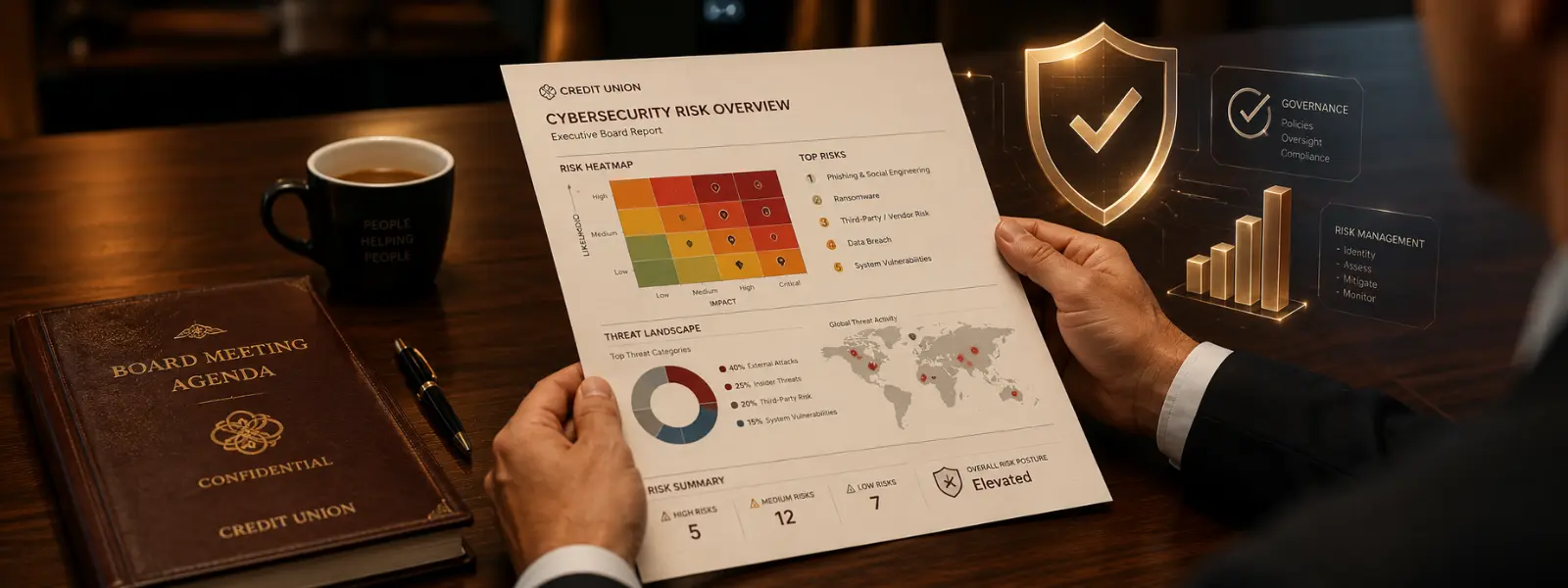
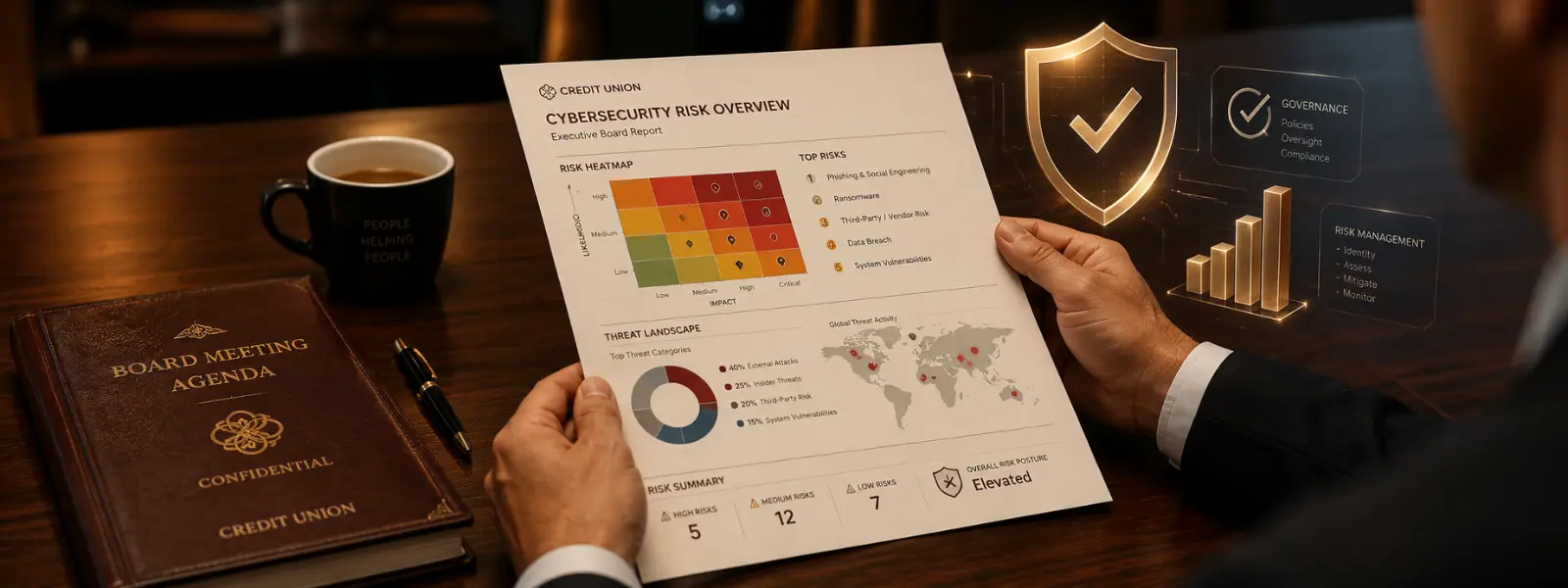
Most credit union security leaders dread board reporting on cybersecurity. Not because they lack substance to report, but because translating technical risk into language that a board can understand, act on, and document appropriately is genuinely difficult. Technical leaders who speak the language of vulnerabilities, patch cycles, and penetration testing find themselves in a room with executives whose frame of reference is member service, loan growth, and regulatory compliance.
The gap between technical cybersecurity and board-level governance is not just a communication problem. NCUA examiners specifically assess whether boards are receiving meaningful cybersecurity reporting and whether that reporting is informing board-level decisions. A board that is receiving a quarterly slide deck with green dashboards but cannot articulate the credit union's most significant cybersecurity risks has a governance gap that examiners will find.
This guide covers what NCUA expects from board-level cybersecurity reporting, how to structure a report that a board can actually use, and the specific elements that demonstrate meaningful governance rather than compliance theater.
What NCUA Expects From Board-Level Cybersecurity Oversight
The NCUA's examination framework assesses cybersecurity governance at the board level as a distinct component of examination. Examiners look for evidence that the board has approved a written information security program, receives regular reporting on cybersecurity risk, is informed about material incidents and significant threats, is engaged in the risk appetite discussion for cybersecurity investments, and can demonstrate through meeting minutes that cybersecurity is a regular agenda item with meaningful discussion - not a brief informational update.
The distinction NCUA draws is between a board that is informed about cybersecurity and one that oversees cybersecurity. Oversight implies active engagement, board member questions, decisions on risk tolerance, and documented accountability for the security program. Information without engagement is not oversight.
Examiners reviewing board meeting minutes look for evidence that board members asked questions, that responses were documented, and that cybersecurity discussions resulted in decisions or direction. Minutes that record only that a cybersecurity update was presented will generate a finding.
The Structure of a Board Report That Works
An effective board cybersecurity report translates technical risk into business-impact language and presents it in a format that enables board-level decision-making.
Executive Summary: Current Risk Posture
Open with a one-paragraph statement of the credit union's current overall cybersecurity risk posture. Use a qualitative rating - low, moderate, elevated, high - and explain what has changed since the last report. Boards cannot act on information they cannot contextualize.
Top Threats Relevant to Your Institution
Describe the two or three threat categories most relevant to credit unions of your size and operational profile during this reporting period. In 2026, these consistently include AI-powered phishing and social engineering targeting member accounts, ransomware attacks timed to weekends and holidays when staffing is reduced, and third-party vendor incidents that create reporting obligations even when internal systems are not directly compromised. Frame each threat in terms of what it could mean for the credit union specifically - member data exposure, operational disruption, NCUA reporting obligations, and member trust damage.
Significant Incidents and Near Misses
Report any security incidents that occurred during the period, including incidents at third-party vendors that triggered the credit union's 72-hour NCUA reporting obligation. Describe what happened, how it was detected, how it was contained, what was or was not exposed, and what was done to prevent recurrence. If there were no reportable incidents, say so, but also note any significant near misses or suspicious activity that was contained before becoming an incident.
Key Metrics in Plain Language
Present a small number of metrics that tell the board something meaningful about security program performance. Avoid metrics that require technical context to interpret. Metrics that work well for board reporting include the percentage of employees who completed security awareness training in the period, the number of phishing simulation emails sent and the click rate, the number of open high and critical vulnerabilities and their age, the current status of the vendor risk review cycle, and whether the annual information security program review and board approval are on schedule.
Program Status and Upcoming Decisions
Describe the current status of significant security program initiatives and any decisions or approvals the board needs to make. If a major vendor contract renewal requires board review of the vendor's security posture, surface it here. If a penetration test revealed findings that require a budget to remediate, present the business case.
Budget and Resource Context
Boards govern resources and risk. Including a brief budget status - whether the security program is operating within budget, whether additional resources are needed, and whether investments made in prior periods are producing expected outcomes - gives the board the information it needs to fulfill its resource governance responsibilities.
Making Board Reports Work Between Reports
Board reports are a punctuation mark on an ongoing governance relationship. Boards that are engaged in cybersecurity between formal reporting cycles - because the security leader has built a relationship with board members, because material incidents are communicated promptly rather than waiting for the next meeting, because the board's cybersecurity risk appetite is documented and revisited - are boards that can provide genuine oversight rather than after-the-fact review.
The NCUA will ask board members questions during an examination. A board member who can speak to the credit union's current top cybersecurity risks, describe a recent incident and how it was handled, and explain the cybersecurity investment decisions the board has made demonstrates the kind of oversight the regulation expects.