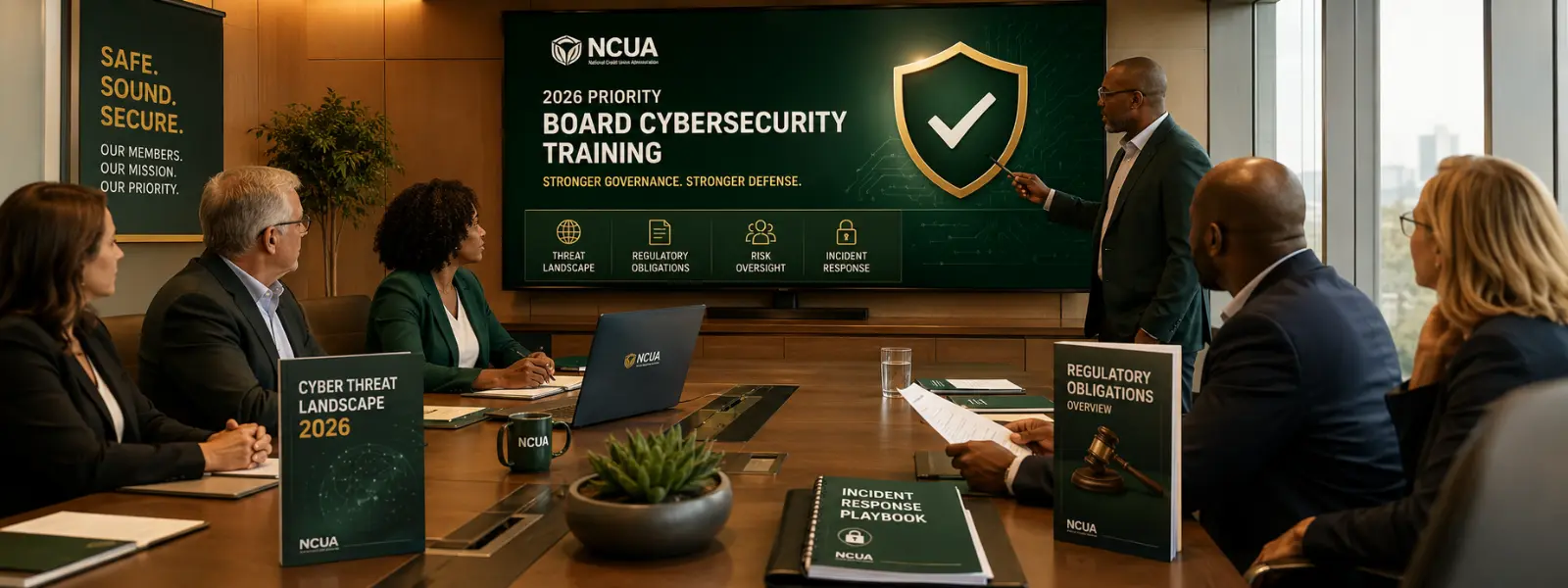
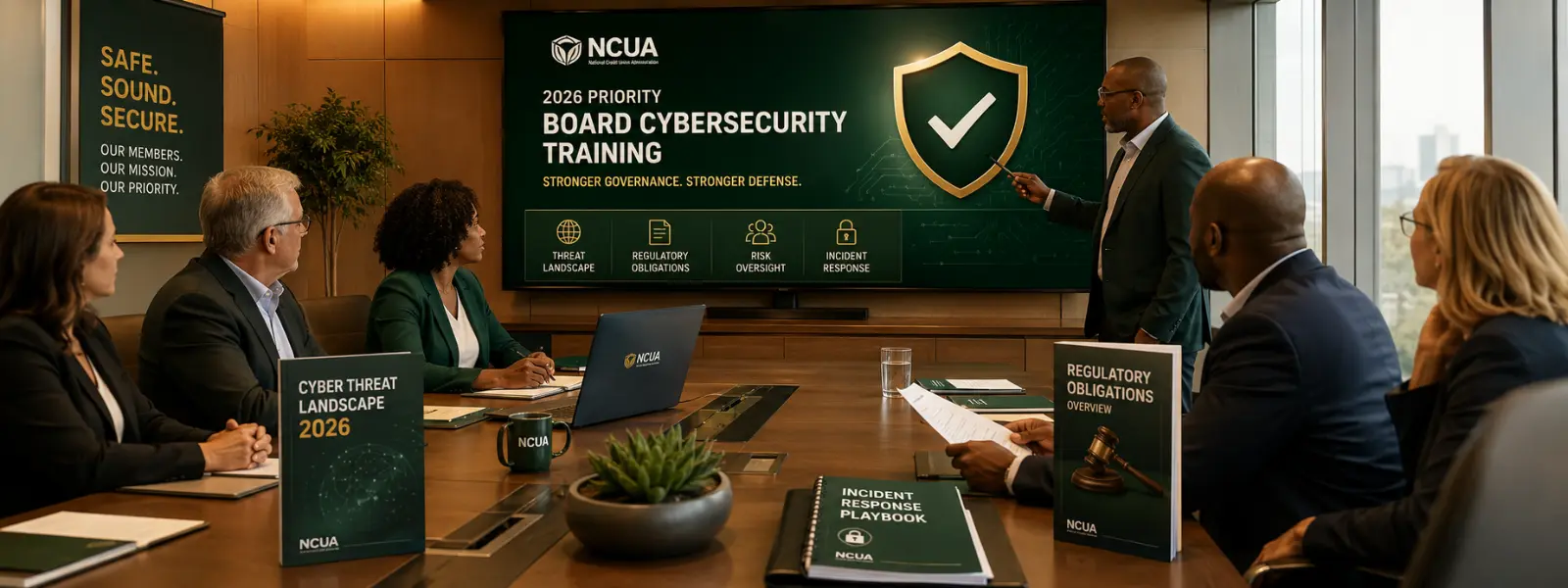
The NCUA's 2026 Supervisory Priorities letter highlights operational and compliance risk, including fraud prevention, payment systems security, and consumer financial protection compliance. For credit union boards, cybersecurity training remains a practical governance need because examiners may evaluate whether directors understand the institution's cyber risk profile, major third-party dependencies, and incident-response obligations.
What NCUA examiners are now looking for goes beyond whether the board receives a cybersecurity update. They are assessing whether board members have received structured cybersecurity education, whether they understand the institution's risk profile well enough to ask substantive questions, and whether their oversight is genuine rather than procedural. The days of a brief quarterly update satisfying the governance requirement are ending.
What the 2026 Supervisory Priority Actually Requires
The NCUA's 2026 priorities make clear that boards must move beyond passive awareness to active comprehension. Examiners are looking for evidence of structured cybersecurity education for board members, not just summary reports from management. The distinction matters operationally.
A board that receives a cybersecurity report quarterly is informed. A board that has received structured education on the threats facing credit unions, the regulatory framework they operate under, and the controls that protect member data can provide genuine oversight. Examiners will ask board members questions during examinations, and a board member who cannot speak to the credit union's current top cybersecurity risks, describe how a recent incident was handled, or explain a significant security investment the board approved demonstrates that governance is not functioning at the expected level.
Examiners reviewing board meeting minutes look for evidence that board members asked questions, that responses were documented, and that cybersecurity discussions resulted in decisions or direction. Minutes that record only that a cybersecurity update was presented will generate a finding.
Why This Change Matters Now
The NCUA's shift to board training as a named priority reflects a broader regulatory trend. Cybersecurity incidents at credit unions have increasingly exposed governance gaps where boards were technically receiving reports but were not in a position to provide meaningful oversight. The 72-hour incident reporting requirement, the third-party vendor breach obligations, and the payment system security requirements all demand board-level decision-making under time pressure. A board that has not been educated on these obligations cannot fulfill them effectively.
The NCUA's 2025 Cybersecurity and Credit Union System Resilience Annual Report to Congress documented 539 cyber incidents reported by credit unions between May 2024 and April 2025, spanning ATM jackpotting, business email compromise, phishing, ransomware, and third-party vendor incidents. The complexity and variety of these incidents makes board education not just a regulatory requirement but a practical necessity for governance to function.
What Effective Board Cybersecurity Training Looks Like
Effective board cybersecurity training for credit unions covers several areas that are specifically relevant to a board's governance responsibilities rather than technical implementation details.
The Regulatory Landscape
Board members need to understand the NCUA's Information Security Examination program, the 72-hour cyber incident reporting obligation and what triggers it, the third-party vendor breach reporting requirements, and the personal accountability implications of board-level governance failures. They do not need to understand firewall configuration. They need to understand what regulators expect of them.
The Current Threat Environment
Board members should receive a regular briefing on the threats most relevant to credit unions of their size and profile. In 2026 this includes AI-powered phishing targeting member accounts, ransomware attacks timed to weekends and holidays, and vendor supply chain incidents that create reporting obligations even when the credit union's own systems are not directly compromised.
Risk Appetite and Investment Decisions
Boards govern resources as well as risk. Effective training helps board members understand the connection between cybersecurity investment decisions and risk exposure, so they can fulfill their fiduciary responsibility to allocate appropriate resources to the security program.
How to Implement Board Training Before Your Next Examination
Credit unions preparing for an NCUA examination should document board cybersecurity training as a formal agenda item with its own meeting minutes entry, separate from the standard security report. The training should be delivered by someone with current knowledge of the threat environment and NCUA requirements , either the credit union's own security leader, a fractional vCISO, or an external cybersecurity educator.
The documentation matters as much as the training itself. Examiners will ask for evidence that training occurred, what was covered, which board members attended, and what questions were asked. Meeting minutes that document a substantive training session with board member questions and responses are evidence of functioning governance. A brief notation that cybersecurity training was provided is not.