Fraudulently Induced Payments: What Credit Unions Owe Members and Examiners
The NCUA's 2026 supervisory priorities identify the risks of fraudulently induced payments, illicit use of consumer data, and cybersecurity breaches targeting payment systems as continuing to grow, and indicate that examiners will assess whether credit unions have effective governance, risk assessment, vendor management, and security frameworks supporting payment system operations.
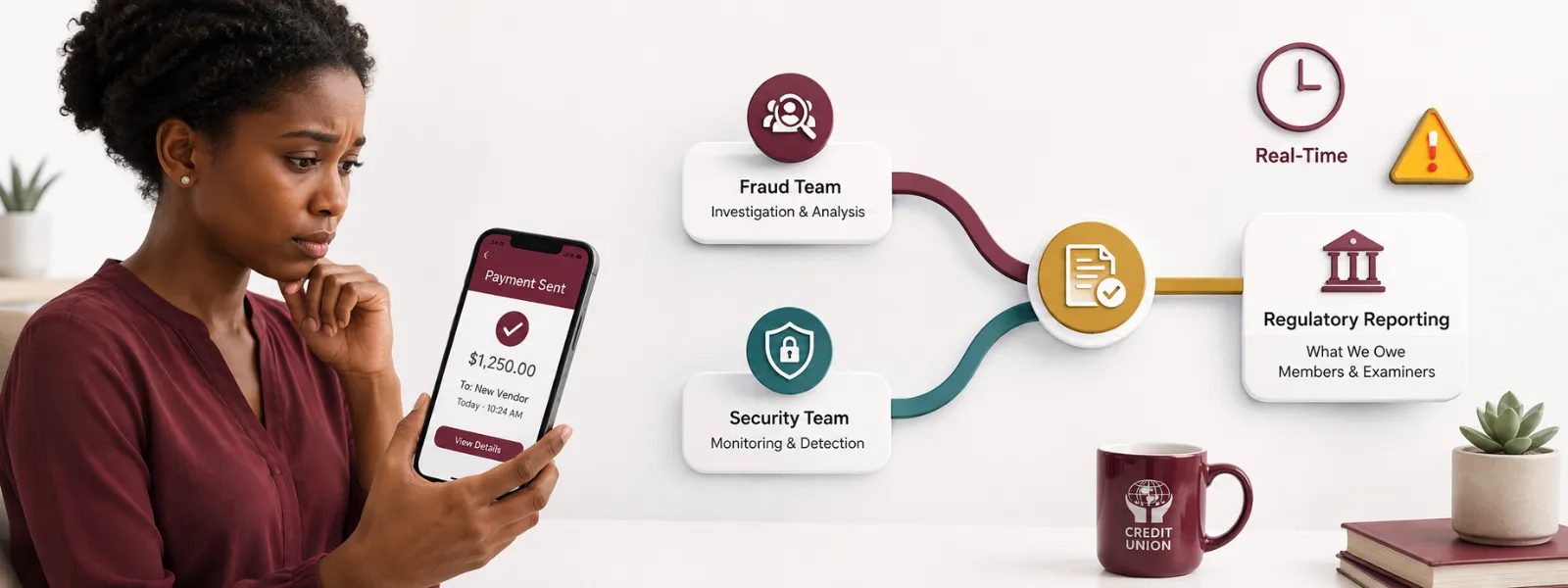
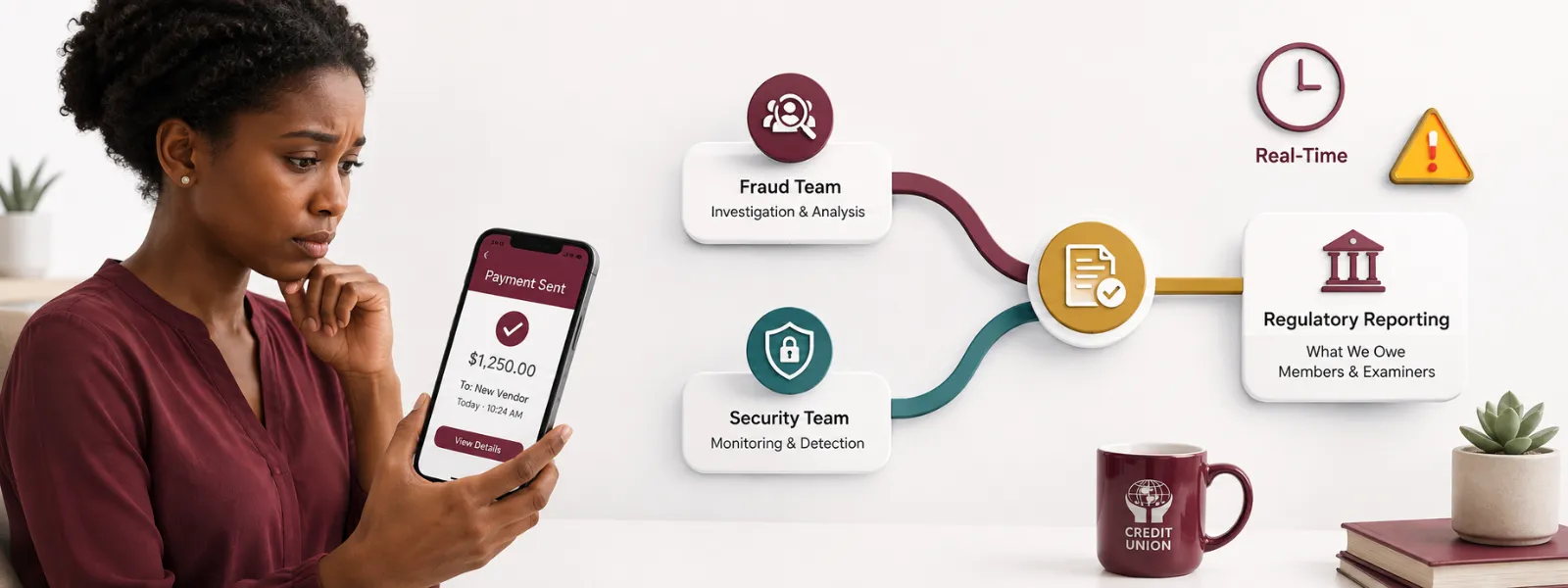
Fraudulently induced payments deserve particular attention because they sit awkwardly between two functions that are often organizationally separate. The fraud team owns member scams. The security team owns cyber incidents. This category is both, and in many credit unions it belongs to neither.
What Makes This Category Different
In a traditional unauthorized transaction, someone other than the member moves money. In a fraudulently induced payment, the member authorizes the transaction themselves, having been deceived into doing so.
The member believed they were paying a contractor, resolving a problem with an account, helping a family member, or completing a transaction with someone they trusted. The credentials were legitimate. The authentication succeeded. Every control designed to verify that the member is the member worked exactly as intended.
Which means the controls that detect account takeover are largely blind to this. Detection has to come from transaction behavior and pattern recognition rather than identity verification.
An institution can have excellent authentication, current MFA, and a clean access control posture, and still be losing member funds steadily to this category. The member is not being impersonated. The member is being manipulated.
Where the Cyber Dimension Enters
These schemes frequently begin with a compromise somewhere. A business email account is taken over and used to send altered payment instructions. A data breach elsewhere supplies the personal details that make an impersonation convincing. A vendor compromise produces a fraudulent invoice that looks legitimate because it originates from a real vendor relationship.
That is why this cannot sit purely with fraud operations. The origin is often a security incident, sometimes at a third party, and the same event may carry regulatory reporting implications alongside the member loss.
The Reporting Considerations
Depending on the facts, a single event in this category may implicate several obligations at once. If the incident involves a compromise of member information systems or a notification received from a third party regarding compromised data or disrupted operations, the NCUA 72-hour cyber incident reporting obligation may be triggered. Suspicious activity may give rise to a SAR filing requirement under the Bank Secrecy Act. Member notification obligations may arise under GLBA and applicable state law if member information was involved.
Whether any given obligation applies depends on specific facts and warrants review with counsel. The structural point is that these obligations run through different teams on different timelines, and if fraud response and cyber incident response operate as separate processes with no shared trigger, one of them may not be evaluated at all.
Real-Time Payments Compress the Timeline
Faster payment rails have changed the practical arithmetic. Transactions on real-time rails typically settle irreversibly, which removes the recovery window that historically allowed some fraudulent transfers to be reversed after detection.
Controls that were adequate when there was time to intervene may not be adequate when settlement is immediate. Detection needs to occur before authorization, which pushes the burden onto transaction monitoring, velocity controls, behavioral analysis, and in higher-risk scenarios, member-facing friction such as confirmation prompts or holds on first-time payees.
What Examiners Are Likely to Look For
Governance establishing who owns this risk and how it is reported to leadership and the board. A risk assessment specifically addressing payment channels, including newer real-time rails rather than only legacy systems. Monitoring controls calibrated to your actual member transaction patterns rather than generic thresholds. Documented handling procedures covering both the member remediation path and the regulatory reporting evaluation. Evidence of member education, since prevention in this category depends heavily on member awareness. Vendor oversight covering payment processors and related third parties.
Practical Steps
Connect fraud operations and cybersecurity incident response with a shared intake and a documented decision point for evaluating regulatory reporting. Ensure that a fraudulently induced payment case is assessed for cyber incident reporting implications rather than closed as a member loss.
Review whether your risk assessments cover each payment channel individually. A consolidated payment systems risk assessment that treats all rails generically may not withstand scrutiny given the differing risk characteristics of ACH, wire, card, and real-time payments.
Invest in member education. It is the least technical control available and, for a category of loss that depends on deceiving the member rather than defeating a system, it is among the more effective ones.
Sources: NCUA supervisory priorities for 2026. Reporting obligations described here depend on specific facts and should be evaluated with counsel.
This article is provided for general information and does not constitute legal advice. Regulatory requirements, compliance dates, examiner priorities, and enforcement posture change frequently. Verify current requirements against primary agency sources and your legal counsel before acting on anything described here.