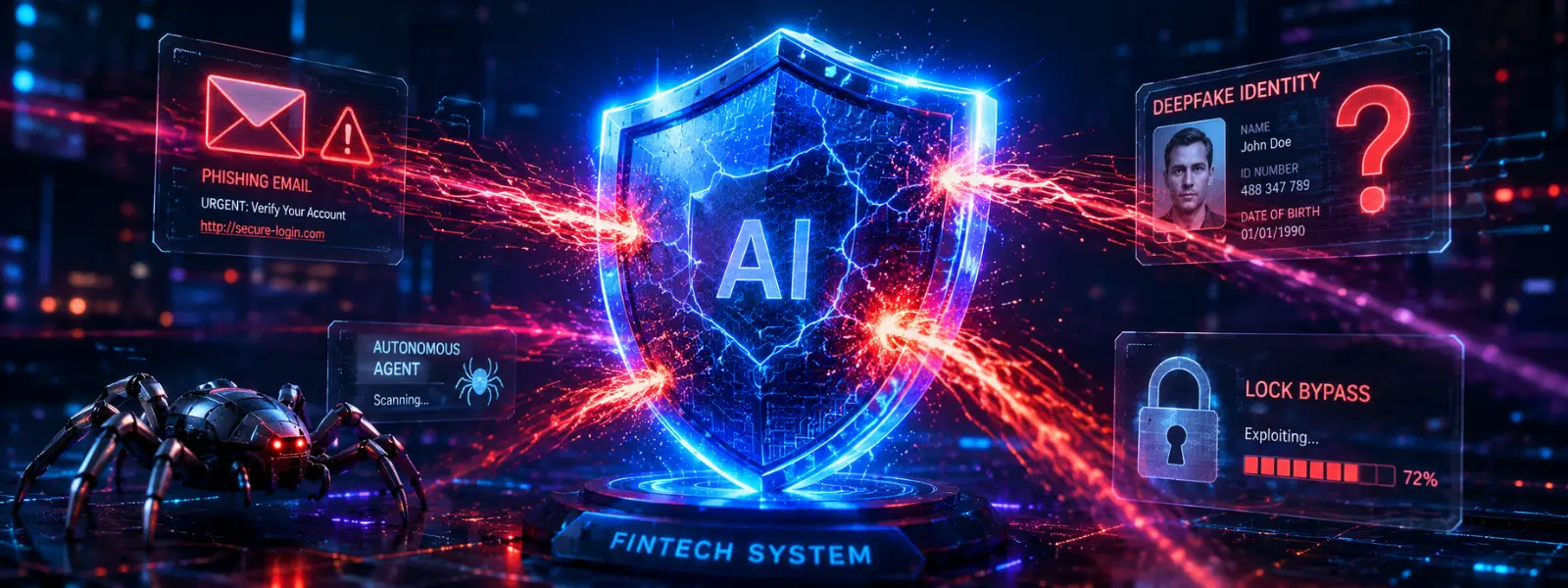
Financial services is the most targeted industry for AI-powered cyberattacks. That is not a projection or a warning about the future. It is a documented current reality. Industry research and cybersecurity reporting consistently identify financial services as one of the most targeted sectors for AI-powered attacks, given the concentration of valuable data and transaction volumes that make financial institutions attractive targets.
For fintech companies, this matters because AI-powered attacks differ materially from the threats most security programs were designed to address. Understanding what has changed, how attackers are using AI, and what your security program must do differently is now an operational requirement, not a future consideration.
What AI-Powered Attacks Actually Look Like
The term AI-powered attack covers several distinct threat categories that are relevant to fintechs.
Autonomous Agents Bypassing Authentication
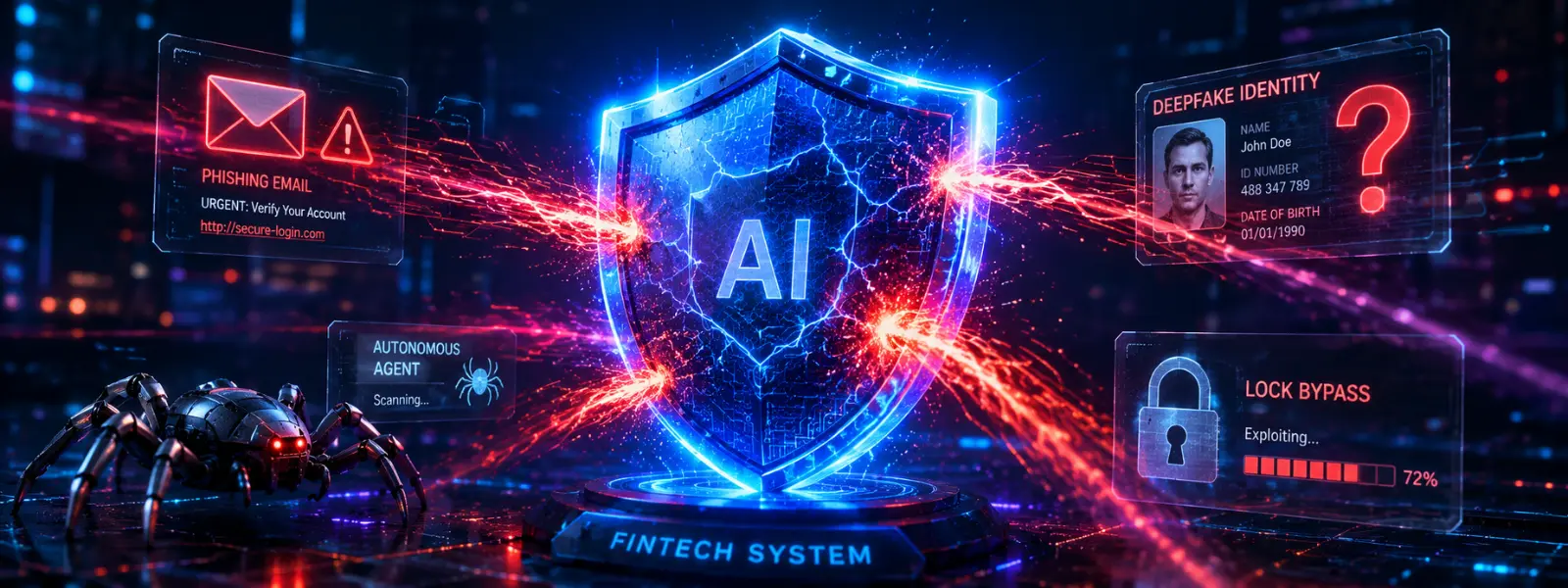
Attackers are now deploying autonomous AI agents specifically designed to bypass authentication controls and manipulate transaction flows. These agents can conduct credential stuffing attacks at a scale and speed that was not previously possible, test thousands of authentication combinations in seconds, and adapt their approach based on the responses they receive. Traditional rate limiting and authentication controls were not designed to handle this threat profile.
AI-Enhanced Phishing
Phishing remains the leading initial access vector for attacks targeting financial institutions. What has changed is the quality of the phishing content. AI now allows attackers to generate highly personalized, contextually accurate phishing emails at scale, removing the typos, awkward phrasing, and generic content that trained users learned to identify as warning signs. In the first half of 2025, security researchers observed 2.4 million phishing emails within financial sector organizations, with almost 30 percent targeted at senior leadership and VIP users.
Deepfake Fraud
The Financial Crimes Enforcement Network issued a report specifically on fraud schemes involving deepfake media targeting financial institutions. Criminals are using AI-generated deepfakes to create fake identity documents, photographs, and videos to evade customer verification controls. For fintechs with digital onboarding flows that rely on identity verification, this is a direct threat to the integrity of your KYC process.
AI-Enabled Adversary-in-the-Middle Attacks
Techniques including Adversary-in-the-Middle attacks designed to bypass multi-factor authentication have been observed at scale against financial institutions. These attacks intercept the authentication flow in real time, effectively defeating MFA controls that are not phishing-resistant. This is one of the reasons NYDFS and GLBA guidance now specifically calls out SMS-based MFA as insufficient.
Why Fintechs Are Particularly Vulnerable
Fintechs face a specific combination of risk factors that make AI-powered attacks particularly dangerous. They process financial transactions at scale, making them high-value targets. They typically use modern, API-driven architectures that create attack surfaces not present in legacy banking systems. They often move quickly and defer security investment. They also rely heavily on third-party vendors and integrations, creating supply chain risk that can cascade from a single vendor compromise.
Rapid AI adoption without security guardrails has also introduced new risk vectors specific to fintechs building AI-powered products. Fintechs using AI for fraud detection, credit scoring, or customer service are creating new attack surfaces through their AI models themselves, including data poisoning, model manipulation, and malicious prompt injection.
What Your Security Program Needs to Address
Traditional security controls are necessary but not sufficient against AI-powered threats. Programs should address phishing-resistant MFA, rather than relying on SMS-based or push-based authentication; adaptive authentication that detects unusual login patterns in real time; enhanced identity verification for onboarding flows, particularly deepfake detection; API security controls that limit automated abuse of endpoints; and continuous monitoring that can detect behavioral patterns associated with AI-powered attacks.
The average cost of a data breach in financial services in 2025 was $6.08 million. For fintechs at the early growth stage, a breach of that magnitude is not a financial setback. It is an existential event. Building security controls that account for AI-powered threats is not a future investment. It is a current requirement.
What This Means for Your Compliance Program
AI-powered threats also have compliance implications. The NCUA has updated its AI resource guidance to address AI-specific risks including algorithmic opacity, data privacy, and fair lending concerns. The FTC and CFPB are actively examining how financial services companies use AI and what controls they have in place. Documentation of your AI security controls, your model governance practices, and your monitoring program is becoming a regulatory expectation in addition to a security necessity.