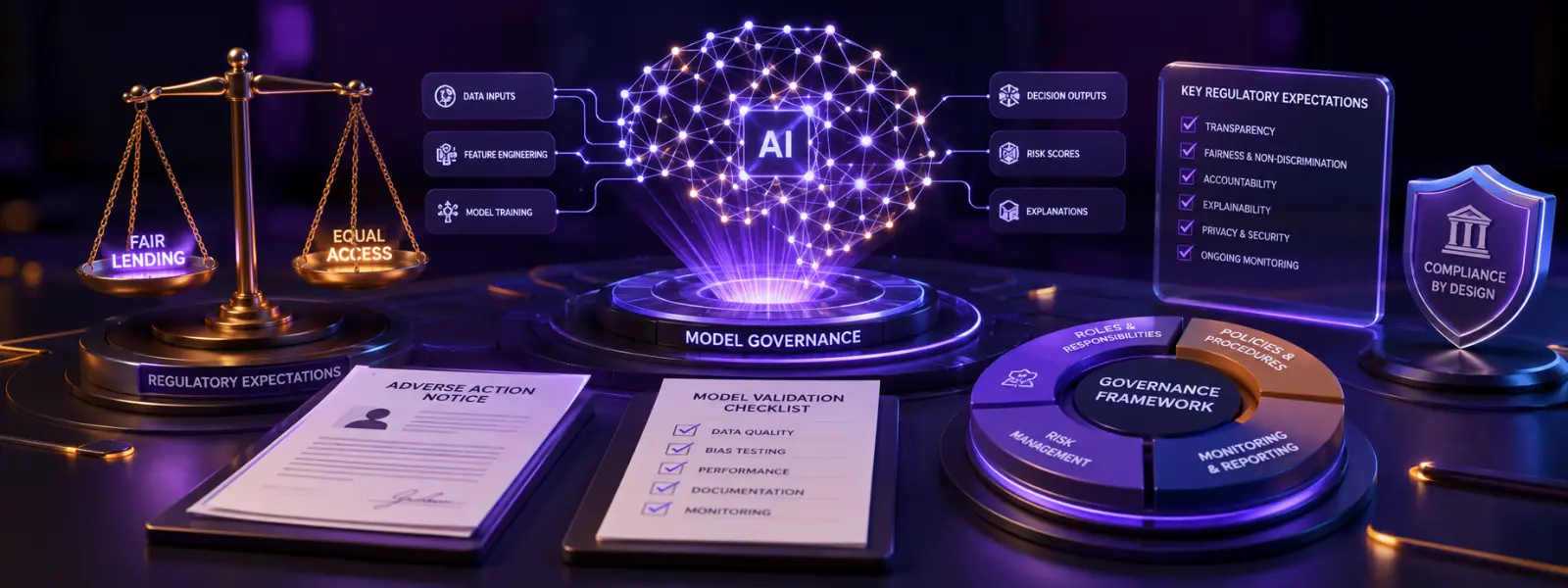
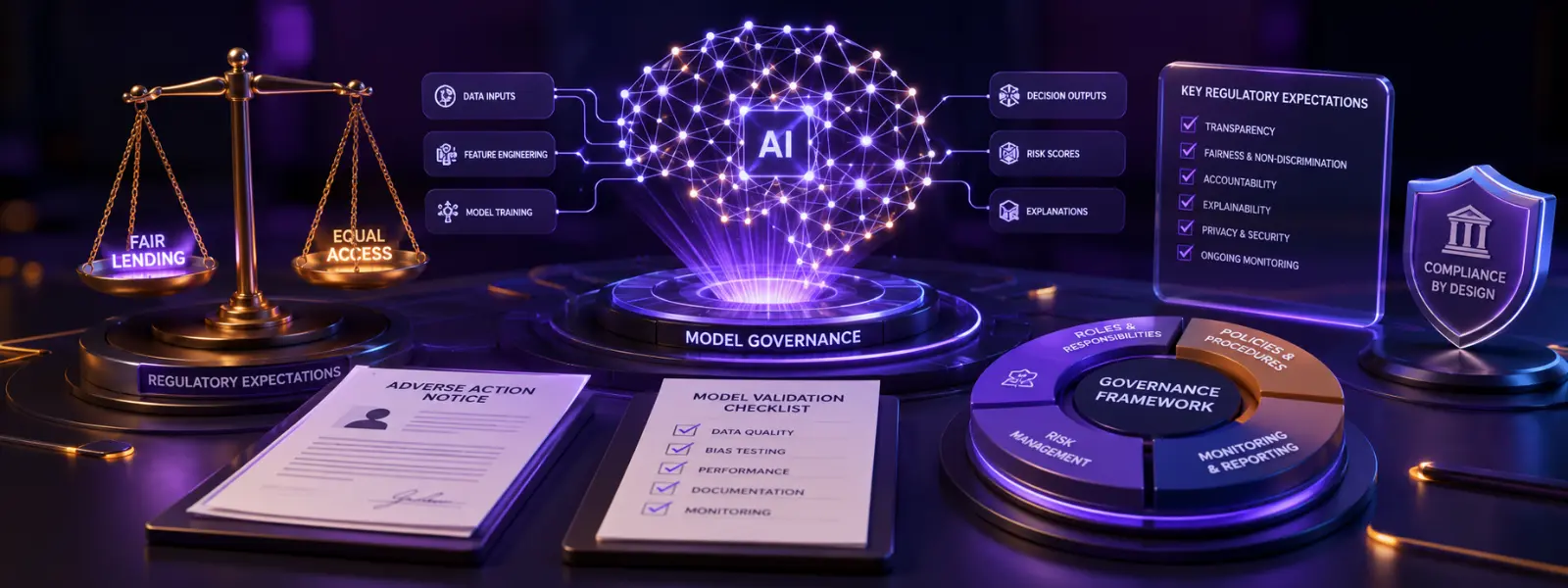
If your fintech uses automated models for credit scoring, fraud detection, pricing, or customer service decisions, regulators are paying close attention to how those models work, what data they rely on, and what controls you have in place to ensure they are fair, accurate, and explainable.
The CFPB, FTC, and state attorneys general have all signaled that AI models used in financial services decision-making are subject to existing consumer protection, fair lending, and unfair or deceptive practices laws. There is no AI exception to those frameworks. And the expectation that you can document and explain how your models work is becoming a regulatory requirement, not just a best practice.
What Regulators Are Actually Assessing
Regulators examining AI model use in fintech are focused on several specific areas.
Model Documentation
You must be able to document how your model works, what data it uses as inputs, what it is designed to predict or decide, how it was trained and validated, and what testing was done to identify potential bias or disparate impact. A model that produces accurate outputs but cannot be explained to a regulator is a compliance risk regardless of its technical performance.
Fair Lending and Disparate Impact
Any model used to make or inform credit decisions is subject to fair lending laws including the Equal Credit Opportunity Act and the Fair Housing Act. The fact that a model uses algorithmic inputs rather than human judgment does not exempt it from fair lending scrutiny. Regulators expect evidence that you have tested your models for disparate impact across protected classes and have documented how you identified and mitigated any bias.
Adverse Action Notices
When an automated model denies credit or takes an adverse action against a consumer, the consumer has a legal right to know the specific reasons for that decision. Generic statements that a model made the decision are not sufficient. You need a process for translating your model's output into specific, meaningful adverse action reasons that comply with the Equal Credit Opportunity Act's requirements.
Third-Party Model Risk
If you use a third-party vendor's model rather than building your own, you do not inherit immunity from model governance requirements. Regulators expect you to conduct due diligence on vendor models, understand how they work sufficiently to explain decisions to consumers and regulators, monitor their performance over time, and ensure they comply with fair lending requirements. Pointing to a vendor's own documentation is not a substitute for your own assessment.
The NCUA Guidance on AI for Credit Unions
The NCUA has explicitly linked its AI resource guidance AI oversight to existing frameworks for third-party relationships and safety-and-soundness supervision. Credit unions using AI for member service, fraud detection, or operational functions need to apply their existing third-party risk management processes to AI vendors, document their AI governance frameworks, and ensure board oversight extends to AI-related risks. The NCUA has signaled that AI oversight will be incorporated into examinations through existing frameworks rather than a new AI-specific rulebook.
The regulatory message on AI model governance is consistent across multiple agencies: AI does not create a new compliance category. It creates new ways to violate existing requirements. Document how your models work, test them for disparate impact, and ensure you can explain their decisions to regulators and consumers.
What a Basic AI Governance Framework Looks Like
A fintech with a basic, functional AI governance framework has documented each model in use including its purpose, inputs, training data, validation methodology, and known limitations. They have tested each model for disparate impact and documented the results. They have a process for monitoring model performance over time and detecting drift. They have an adverse action process that translates model outputs into compliant consumer notices. And they have applied their vendor risk management process to any third-party models they rely on, with contractual protections that allow them to audit model performance and compliance.
Building this framework is not a one-time project. Models change, data changes, and regulatory expectations continue to evolve. AI governance needs to be an ongoing discipline, not a checkbox exercise completed at launch.